Part of: How to Choose a Custom Home Builder
Deposits, draws and change orders
Custom Home Deposits, Payments and Change Orders
Every payment you make to a builder should match something you can see, count or sign for. On a whole house, payments follow the stages of the build and line up with your bank’s draws. On our ICF foundation and wall work it is 10% at signing, 40% when the material lands on your lot, 40% before the pour, and the last 10% held back the way the Construction Act says.
This is for people about to sign a building contract in Ontario who want to know what is normal, what protects their money, and what should make them walk away.
Short answer
Pay for What You Can See on Site
You will hear people say “never pay for anything that is not in the ground.” I understand the feeling, but it is not how building works. Suppliers want paid when the truck leaves the yard, and no small builder can float a whole house of material for you.
The better rule is simpler. Before you write a cheque, walk the lot. A signed contract and permit work for the deposit. Pallets of forms, bundles of rebar and a delivery slip you can count for the material payment. Walls stacked, braced and inspected for the pre-pour payment. If you cannot see it, do not pay for it yet. HST applies to deposits too; here is how HST on deposits works.
And keep the last 10% in your pocket until the law says it can go. That is not a lack of trust. That is the system working the way it was designed.
What we do
A Normal Deposit and Payment Schedule
Here is our schedule for an ICF foundation and wall contract, and what you should check before each payment. On a whole house the same idea runs through every stage, with more steps: foundation, framing and roof, mechanical rough-ins, drywall, finishes. Each one is written into the contract and matched to something you can see. Other builders split it differently. That is fine, as long as each payment lines up with something real.
| Stage | Payment | What you should see first |
|---|---|---|
| Contract signed | 10% | A signed contract with a fixed scope, drawings, a price and this same schedule written into it. Tarion enrolment for your address. |
| Materials delivered | 40% | Forms, rebar, bracing and the other big-ticket material sitting on your lot. Compare the delivery slips to what is on the ground. Take photos. |
| Before the pour | 40% | Walls stacked, rebar in, bracing up, openings bucked, and the building inspector’s sign-off where your township requires one before concrete. |
| Holdback | 10% | Held by you and released when the lien period under the Construction Act has run out. More on that below. |
Why pay for material before it is installed? Because it is the single biggest cost on an ICF job and it is all bought in the first weeks. Once it is on your property and you have the slips, you are not paying for a promise. You are paying for a pile you can walk around.
What I would not accept as a homeowner is a large “mobilization” payment with nothing on site, or a schedule that asks for most of the money before the walls are even up. If you want to see how we build a number in the first place, read how our pricing works.
Banks and the holdback
How Payments Line Up With Construction Draws and the 10% Holdback
Most people building a custom home use a construction mortgage, and the bank pays in draws. An appraiser or inspector visits, decides what percentage of the house is done, and the lender releases money against that. The bank does not care what your builder’s schedule says. It cares what it sees.
So before you sign, put our schedule and your lender’s draw schedule side by side. The early stages are where the gap shows up, because material arrives before the bank thinks much is “complete.” Plan your own cash for that gap. Our guide to construction mortgages and draws in Ontario walks through it.
The holdback is separate. Under Ontario’s Construction Act, the owner keeps back 10% of what is paid as the work goes in. That money sits there so that if a supplier or trade does not get paid, they have something to claim against besides your house. A trade generally has 60 days to preserve a lien, counted from substantial performance, completion, abandonment or termination.
The Act changed on January 1, 2026. Contracts that run longer than 12 months now come with a yearly holdback release, there are tighter rules on invoices, and lien rights still run off completion, not the yearly release. I build houses, I do not practise law. Have a construction lawyer read your contract and tell you the exact release dates. Our page on the lien holdback in Ontario has more.
Changes during the build
Change Orders: Written, Priced, Signed Before Work
Every house changes a little once you are standing inside it. A window moves, a wall goes, the tub becomes a shower. That is normal. What is not normal is finding out what it cost when the final invoice shows up.
Our rule, and the one I would ask any builder to follow:
- The change is written down: what is changing, where, and with what material.
- It has a price, including any credit for work that is no longer needed.
- It says whether the schedule moves, and by how much.
- You and the builder both sign it before anyone picks up a tool.
Changes made on paper are cheap. Changes made after concrete is poured or drywall is up are not, because you are paying to tear out good work. That is why we push hard to settle the plan early.
Watch your allowances too. If the contract says “kitchen allowance” and you pick cabinets that cost more, that overage is a change and should be handled the same way. Our page on builder quote allowances explains how those get blown.
One new rule worth knowing: under the 2026 Construction Act changes, if you get an invoice you think is wrong, you are expected to object in writing within 7 days, or it can be treated as a proper invoice. If something looks off, say so in writing, quickly.
Your safety net
What Tarion Deposit Protection Covers on a Contract Home
If you own the land and hire us to build on it, Tarion calls that a contract home. The builder has to enrol the home with Tarion before signing the construction contract. If a builder will not show you the enrolment, stop there.
For contract homes, Tarion’s financial loss compensation is up to $40,000. It covers the gap between what you paid the builder and the value of the work and materials actually supplied, if the builder fails to substantially perform the contract. Confirm the current limit with Tarion before you sign, since their deposit rules have been changing.
Here is the honest part. On a large custom home, a 10% deposit alone can be bigger than that limit. Tarion is a backstop, not a blank cheque. The real protection is a payment schedule that never lets you get far ahead of the work on site.
Check any builder on the HCRA’s Ontario Builder Directory before you sign. It shows the licence, any conditions, and whether your address is enrolled. Our Tarion warranty guide covers the rest of the coverage.
Walk away signs
Red Flags: Cash, Pay-the-Trades-Directly, Rushing You to Sign
The HCRA publishes its own list of reasons to pause before you sign or pay. I agree with every one of them, and I have seen most of them in person.
Pause if you see this
- A request for cash, or payment to a person rather than the company on the contract.
- Extras paid “off the books,” outside the written agreement.
- A contract that makes you hire or pay the trades directly. That quietly makes you the builder.
- No proof of an HCRA licence or Tarion enrolment.
- Vague scope, or wording that lets the builder make big changes without asking you.
- Pressure to sign today, or being told you do not need a lawyer.
What good looks like
- Payments to the company named on the contract, by cheque or bank transfer.
- A schedule tied to stages you can see on site.
- Written, priced, signed change orders.
- Time to take it to your lawyer and your lender.
- A builder who answers questions before you sign, not after.
If you are comparing builders right now, our questions to ask a home builder and the 12 contract clauses that matter are worth reading before any meeting. For the bigger picture on picking who builds your house, go back to how to choose a custom home builder in Ontario.
Want a second set of eyes on a contract?
Send me the payment schedule you have been offered, ours or someone else’s. I will tell you plainly whether it lines up with the work.
Free book
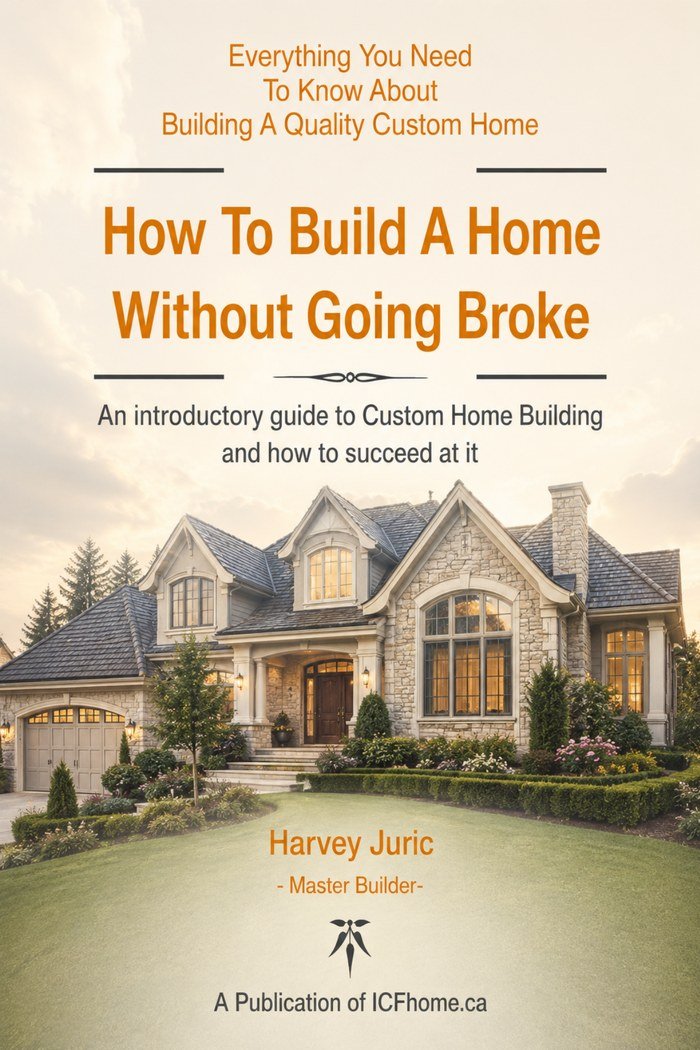
How to Build a Home Without Going Broke
Not ready to call anyone yet? Fair enough. Read the book first: the costly mistakes I have watched people make over 45 years of building, and how to avoid every one of them. Free PDF, straight to your inbox.
Questions people ask
FAQ
How much deposit does a custom home builder take in Ontario?
Is it normal to pay for materials before they are installed?
What is the 10% holdback?
How should change orders be handled?
How much does Tarion protect on a contract home?
Should I ever pay a builder in cash?
Keep reading
Related guides
Keep going
More in this topic: Choosing a Builder and Contracts
See all 12 steps of building a custom home, with every guide on the site | Straight answers: hours, payments, warranty, where we build
Pick the path that matches where you are
Want to see how our payment schedule would line up with your bank’s draws? Start here. Or call 705-533-1633, Monday to Friday 8 to 5 (weekends by appointment).