Part of: Building on Vacant Land in Ontario
Land, lot and site
Is My Lot Buildable? A Checklist Before You Buy in Ontario
A for-sale sign on a vacant lot is not a building permit. Before you firm up, check zoning, road access, room for septic and a well, hydro, the conservation authority and title.
The list I go through when someone sends me a listing and asks, “Can you build on this?” Print it and make your offer conditional until every line has an answer.
Short answer
Buy the condition period, not the view
I have walked plenty of pretty lots with a glimpse of the bay. Some could not legally hold a house, or could, but only after a year of approvals and a septic system that cost more than the kitchen. If you will build the house yourself, the land matters for HST as well; here is how the land counts in the owner-built rebate. If you want someone to walk it with you, Georgian Bay Siteworks does an on-site lot assessment.
The fix is boring and it works. Put a condition in your offer, with your lawyer’s wording, that gives you time to check the lot. Then use that time. Below is the checklist in the order I work through it.
Planning
1. Zoning and permitted use: can a house go here at all?
Every lot sits in a zone in the township’s zoning by-law. The zone says what is allowed (a house, a cottage, nothing at all) and sets the rules for lot size, frontage, setbacks, lot coverage and height. In Tiny, for example, the current comprehensive zoning by-law is 22-05.
- Ask the planning department for the zone and permitted uses. Ask in writing and keep the reply.
- Check lot size and frontage against the zone. A lot that is smaller or narrower than the by-law asks for may still be buildable as an existing lot of record, but ask. Do not assume.
- Sketch the house inside the setbacks. On a narrow or odd-shaped lot, the building envelope is often smaller than you think.
- Ask about holding zones and pending by-law changes. Either can stop a permit cold.
If what you want does not fit, a minor variance may fix it. That is a separate process with its own timeline, which I cover in zoning and minor variances for a new home.
Access
2. Road access: municipal, private or seasonal
A lot on a year-round, township-maintained road is the easy case. A lot on a private road, an unopened road allowance or a seasonally maintained road is a different animal. Many townships limit or refuse new homes on roads they do not plow, or ask for an agreement that says you accept limited service.
- Ask the township who owns and maintains the road, and in which months.
- Ask whether a building permit can be issued on that road, and what agreement, if any, goes on title first.
- Ask your lender and insurer too. A road the township will not plow is a road some lenders will not touch.
There is more on this in building on a private or seasonal road.
Services
3. Room for septic and a well
On a rural lot, the septic system usually decides where the house goes, not the other way around. The Ontario Building Code sets minimum distances, and they eat space fast on a small lot.
| Clearance from | Septic tank | Leaching bed |
|---|---|---|
| The house | 1.5 m (about 5 ft) | 5 m (about 16 ft) |
| A drilled well cased to at least 6 m | 15 m (about 50 ft) | 15 m (about 50 ft) |
| Any other well | 15 m (about 50 ft) | 30 m (about 100 ft) |
| Lake, river or pond | 15 m (about 50 ft) | 15 m (about 50 ft) |
| Property line | 3 m (about 10 ft) | 3 m (about 10 ft) |
Those distances apply to the neighbour’s well too. A small lot between two existing wells can run out of room for a bed.
- Find out who reviews septic in that township. It varies. In Tiny, sewage approvals go through the Township Sewage Authority, which the township’s own permit checklist lists as Tatham Engineering. Elsewhere it may be the township building department or another agency.
- Dig a test pit before you firm up if the seller will allow it. The soil type and the depth to water or rock decide whether you get a conventional bed or a raised bed, and that swings the price a lot. See what changes a septic quote.
- Ask neighbours how deep their wells are and how the water is. Then read what a well costs in Simcoe County.
If the soil looks soft, wet or filled, that matters for the foundation as well as the septic. I explain when that calls for an engineer in do you need a soil report.
Hydro and the driveway
4. Hydro, the driveway, and the permits that come first
- Call the utility about hydro. Ask where the nearest line is and whether it needs to be extended. A house set far back from the road can mean poles or trenching at your cost. The details are in getting hydro to a rural lot.
- Get the entrance permit sorted early. In Tiny, an entrance permit is required before you clear a vacant lot and before you apply for a building permit. The fee for a permanent entrance is $230 as of 2026, the inspection can take up to two weeks, and if you apply in winter the review may not happen until spring. You pay for the culvert.
A lot bought in November can sit until spring before the driveway is approved, and the permit waits with it.
Environment
5. Conservation authority, shoreline and floodplain
If the lot is near water, a wetland, a valley or the bay, a conservation authority may have to approve your plans before the township issues a permit. Which one depends on where you are:
NVCA
The Nottawasaga Valley Conservation Authority covers Wasaga Beach, Collingwood, Clearview, The Blue Mountains, Springwater, Oro-Medonte and Barrie, among others. A general inquiry is free.
Lake Simcoe side
Land draining to Lake Simcoe falls under the Lake Simcoe Region Conservation Authority. Some townships straddle two watersheds, so check the lot.
Severn Sound shore
Tiny is not on NVCA’s member list. Around Severn Sound, the Severn Sound Environmental Association works with the towns, but start with the township planning department and ask who reviews your lot. Our shoreline permits page has more.
- Check the conservation authority map, then ask. NVCA has an interactive map and says it answers general inquiries within two business days. A pre-consultation costs $578, credited to the permit fee.
- On the Georgian Bay shore, ask about extra approvals. NVCA notes shoreline work may also need permits from the Ministry of Natural Resources and Fisheries and Oceans Canada.
- In Tiny, ask about the shoreline by-law. Tiny passed a Shoreline By-law in May 2025 covering work near the 178-metre contour. At the township’s last notice I found, permits there were paused while an appeal sat at the Ontario Land Tribunal. Ask planning for the current status before you buy a beach lot.
Legal
6. Easements and title: the lawyer’s part
Your lawyer earns their fee here. A lot can look clean and still carry a hydro easement, a neighbour’s right-of-way, or a registered agreement that limits what you build.
- Ask your lawyer to pull title and every registered instrument before the condition date, not the week of closing.
- Get the survey. If there is no current survey by an Ontario Land Surveyor, budget for one. Tiny’s permit checklist asks for a signed survey for the grading plan anyway.
- On waterfront, check for a shore road allowance. On some shorelines the strip at the water belongs to the township.
Also budget for the fees that come with the permit. Tiny’s checklist lists township, county and education development charges, plus a $5,000 lot grading deposit. Other townships differ; see the hidden costs of buying land.
Who to call
What it costs to check, and who to call
| Question | Who to call | Cost to ask |
|---|---|---|
| Zone, permitted use, setbacks, lot of record | Township planning department | A phone call or email; a formal zoning letter may carry a fee |
| Septic room and soil | Septic reviewer for that township; a septic designer for a test pit | Ask for the test pit price in writing |
| Regulated area, shoreline, floodplain | Conservation authority, or township planning where there is none | NVCA general inquiry free; pre-consultation $578 |
| Title, easements, agreements | Your real estate lawyer | Part of the legal fee; ask up front |
| Will a lender finance it | Your bank, credit union or broker | Free; see mortgages on vacant land |
Send me the listing before you firm up
Book a call and send me the listing. I will go through this list with you and tell you what I would worry about on that lot. If a house does not fit, better you hear it now than after closing.
For the bigger picture on costs, permits, septic and wells, go back to the guide on building on vacant land in Ontario.
Free book
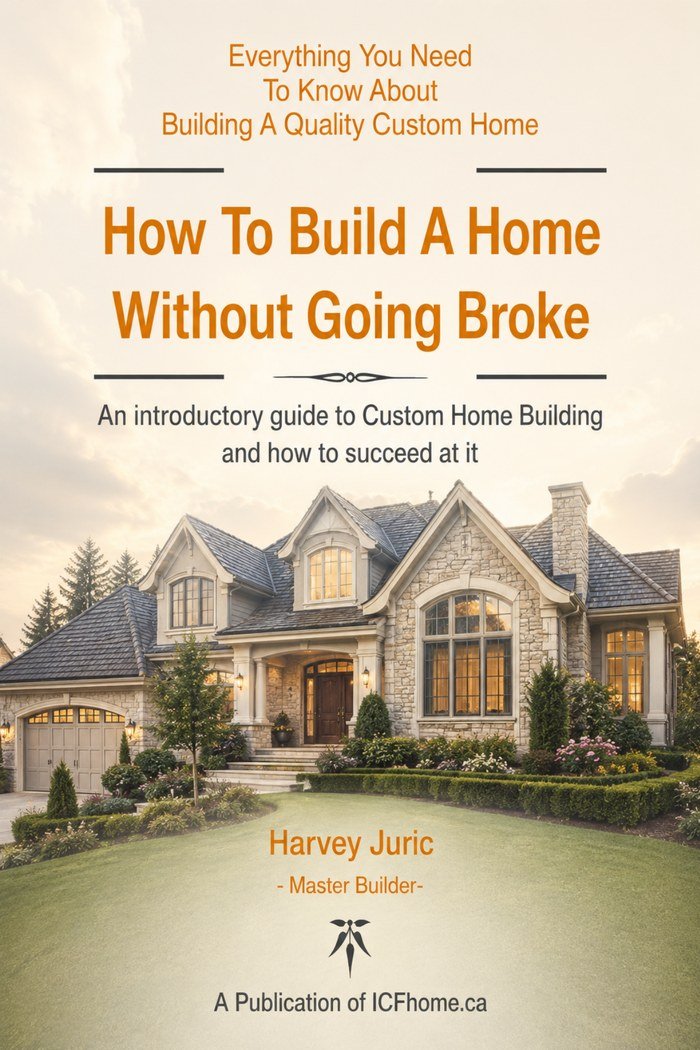
How to Build a Home Without Going Broke
Not ready to call anyone yet? Fair enough. Read the book first: the costly mistakes I have watched people make over 45 years of building, and how to avoid every one of them. Free PDF, straight to your inbox.
Questions people ask
FAQ
How do I know if a vacant lot is buildable in Ontario?
Does a building lot listing guarantee I can build?
How much room does a septic system need?
Can I build on a seasonal or private road?
What does it cost to check a lot before buying?
Will you look at a lot before I buy it?
Keep reading
Related guides
Keep going
More in this topic: Land, Lots and Site Work
See all 12 steps of building a custom home, with every guide on the site | Straight answers: hours, payments, warranty, where we build
Pick the path that matches where you are
Looking at a lot right now? Send me the listing before your condition date and we will go through it together. Or call 705-533-1633, Monday to Friday 8 to 5 (weekends by appointment).